Tel./WhatsApp:
+86 15266206885
E-mail:
[email protected]


Avoid your inquiry is delay response, please enter your WhatsApp/Skype along with the message, so we can contact you at the very first time.
We will reply you within 24 hours. If for urgent case, please add WhatsApp/WeChat: ,. Or call directly.
Choosing the wrong conveyor can slow your packing line, jam products, and create costly rework. It also burns time in meetings—because nobody wants to “guess” on the belt system. The solution is simple: start from the most common conveyor system, then match it to your product, speed, and layout.
The most common conveyor belt system is the belt conveyor (often a flat belt conveyor). It’s widely used because it’s versatile, cost-effective, and easy to integrate into packaging lines for cartons, parcels, totes, and many other loads. In most warehouses and automated packing stations, a standard belt conveyor becomes the “default” choice—then you add curves, inclines, rollers, and controls as needed. For background, see overviews like Wikipedia’s belt conveyor explanation and industry summaries that call belt conveyors the most common powered conveyor type.
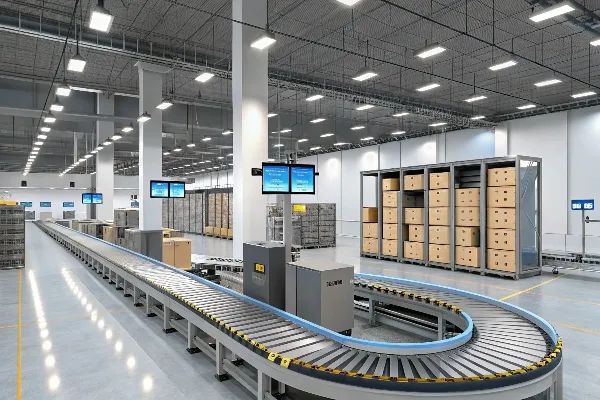
conveyor belt system in automated warehouse
Which conveyor is the most common conveyor in the world—and why?
Belt conveyor basics: what a conveyor belt system consists of
Flat belt conveyors vs. modular belt conveyors: which belt is right?
Roller conveyor vs. belt conveyor: when do rollers win?
How do you choose the right conveyor system in 10 minutes?
What belt material should you pick for food processing and packaging?
Incline conveyors: how to move products uphill without slipping
Common conveyor belts: wear and tear, tracking, and maintenance
Case study: packaging line upgrade that boosted productivity
What to ask a supplier before you buy a conveyor system?
In most factories, fulfillment centers, and packaging halls, the belt conveyor is the most common conveyor you’ll see. Many references describe belt conveyors as widely used because they are versatile and simple. A belt conveyor moves items on a continuous belt supported by rollers and driven by pulleys—clean, steady, and easy to scale. For example, general references explain how a conveyor belt loops around pulleys and handles both general material handling and bulk material transport.
Why is it the common conveyor choice? Three reasons:
Simple design → fewer surprises in daily transport
Handles many product shapes → cartons, polybags, totes, trays, even unstable loads
Easy integration → works naturally with automatic packaging machines, labelers, weighers, scanners, and sorters
From our packaging projects, I see the same pattern: buyers want the fastest path to a stable line. Starting with a standard belt conveyor gets you moving—then you optimize.
A conveyor belt system is straightforward. At its core, a belt conveyor has:
A continuous belt (the carrying surface)
Drive and tail pulleys (pulley)
Support rollers (roller) or a slider bed
Frame and guarding
Motor + controls (speed control, sensors, E-stops)
In a standard belt conveyor, the belt loops around the pulleys and moves products forward. Many explanations describe the “carrying medium” and how drive and idler pulleys work in a belt conveyor system. That’s why the conveyor system is so common: the parts are known, standardized, and easy to service.
Mini chart: what changes most in real projects?
Belt width changes for product size and stability
Speed changes for throughput and accumulation
Frame changes for hygiene, washdown, or heavy loads
Controls change for automation level (manual → semi-auto → fully automated)
If you’re building a packaging line, you can think of the conveyor as the “floor” that carries work from station to station. It’s the backbone of material handling—and that’s why it shows up everywhere.
When someone asks “What is the most common conveyor belt system?”, they usually mean flat belt conveyors. Many industry guides describe the flat belt conveyor as the most common belt conveyor type for general transport. Flat belts work great for cartons, parcels, and smooth-bottom items.
But modular belts matter too—especially in certain industries. Modular belt conveyors use interlocking plastic modules. They’re popular where cleaning and hygiene are important, including packaging near food processing areas. Some industry articles describe modular and monolithic belts as popular in food-grade applications.
Here’s a fast comparison:
| Belt type | Best for | Strengths | Watch-outs |
|---|---|---|---|
| Flat belt conveyors | cartons, bags, e-commerce parcels | low cost, quiet, easy to install | can be sensitive to sharp edges, tracking needs care |
| Modular belt conveyors | wet areas, washdown zones, food packaging | easy cleaning, strong surface, flexible layouts | higher cost, needs correct sprockets and tension |
If you ship to regulated markets, belt material selection can also tie into compliance expectations (food contact, cleanability, documentation). Even when you’re not in the food industry, buyers often pick modular belts because they want fewer downtime events.
Not every conveyor should be a belt. A roller conveyor can be a better conveyor type when cartons have flat, rigid bottoms and you want gravity flow, accumulation, or low-energy transport.
Use rollers when:
You need accumulation without product-to-belt friction
You want zero-pressure accumulation zones
You handle strong cartons or totes that roll well
You want a simple, modular layout
Use a belt conveyor when:
Products are soft, unstable, or irregular
You handle polybags, pouches, or small items that can fall between rollers
You need incline transport
You want smooth, controlled flow into packaging machines
This is why different types of conveyor belts and roller systems often appear in the same plant. One line might use belt conveyors at packing stations, then roller zones for accumulation and staging. It’s normal to mix systems. The key is choosing the right conveyor for each section.
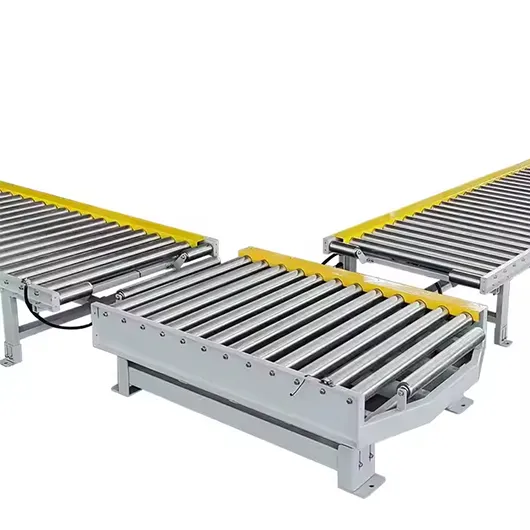
Motorized Pallet Roller Conveyor
When B2B buyers ask us for a quote, I always start with a quick checklist. You can do this in one short call.
Product type: carton, bag, tray, bottle, tote
Size and weight range
Bottom condition (flat? flexible?)
Line goal: move products, accumulate, merge, divert
This is where most buyers land:
Belt conveyor for stable transport and packaging workstations
Roller zones for accumulation and staging
Incline belt sections if you must go up/down
Sometimes a chain conveyor for pallets or heavy-duty skids
Available footprint and turns
Speed and required productivity
Environment: dust, moisture, washdown, temperature
Noise limits and operator safety needs
Tip: If you’re unsure, start with a standard belt conveyor and add modules. That’s why belt conveyors are the common types choice in packaging and warehousing.
Even if you’re “just packaging,” you may be next to food processing areas or handling primary packs. In those cases, belt choice becomes part of risk control and compliance planning.
Common options include:
Rubber conveyor belts (good grip, many general uses)
PVC/PU belts (common in packaging, clean surface)
Plastic modular belts (washdown-friendly, replaceable modules)
Many belt conveyor explanations note that different belt materials exist for different applications. And in food-adjacent lines, modular or monolithic food-grade belts are often preferred because they’re easier to clean and inspect.
If you’re in the used in the food or used in the food industry environment, ask your supplier for:
Material documentation
Cleaning guidance
Splice type and repair method
Chemical resistance notes
An incline section looks simple, but it causes many real-world issues: slipping, tipping, and unstable flow.
A few practical rules:
Use cleated belts for products that slide
Add side guides for narrow cartons
Reduce speed on the incline if products tip
Use sensors before and after incline to prevent pileups
Many systems combine a belt conveyor with an incline module. This is common in e-commerce packing where cartons must rise to a sortation mezzanine.
If your line must handle odd shapes, we often test incline behavior early. A simple trial prevents later headaches and reduces “mystery jams.”

Mobile Truck Loading Unloading Belt Conveyor
Any conveyor belt will face wear and tear. What matters is how fast you can detect issues and how simple the fix is.
Most common issues we see:
Belt tracking drift (belt moves left/right)
Pulley lagging wear
Roller contamination (dust and debris)
Edge damage from sharp cartons
Tension mis-set after belt change
Simple habits that help:
Weekly visual check of belt alignment
Keep rollers clean in dusty zones
Replace worn lagging on the drive pulley
Use correct belt tension (not too tight)
Safety matters too. Occupational Safety and Health Administration has requirements for conveyors, including warnings and lockout/tagout practices during servicing. This is not just compliance—it reduces downtime and injury risk.
Here’s a typical story from a distributor-warehouse project we supported.
A fulfillment client used mixed conveyors with poor timing between carton sealing and labeling. Cartons would bunch up, scanners missed reads, and operators constantly stopped the line. They had “automation,” but it didn’t feel automated.
We rebuilt the section using:
A standard belt conveyor at the working station
Short accumulation zones
Photoeyes and speed control to synchronize carton flow
Better guides and a smoother transfer into labeling
Fewer stops and less manual pushing
More predictable carton spacing
Faster training for operators
Better scan rates and fewer mislabels
This is why I say: conveyor systems are the backbone of packaging automation. The packaging machine may be the star, but the conveyor keeps the whole show moving.
Before you sign, ask these questions. They protect your budget.
What belt widths do you recommend and why?
What motor and speed range do you propose for our transport products needs?
How do you handle curves, merges, and transfers?
What’s your recommended spare parts list?
How fast can you deliver?
What is your commissioning and training plan?
What documentation do you provide for certifications and safety?
As a packaging machine manufacturer, we also look at how the conveyor integrates with:
Case sealers
Label print-and-apply
Checkweighers
Sortation and scanning
If a supplier only sells a conveyor but doesn’t care how it connects to the rest, you may lose weeks later. The right conveyor system is crucial—because it touches everything upstream and downstream.
This table helps you pick a starting point.
| Common system | Best use | Why it’s popular |
|---|---|---|
| Belt conveyor | cartons, parcels, mixed SKUs | stable, versatile, cost-effective |
| Roller conveyor | carton staging, accumulation | low energy, modular, simple |
| Modular belt conveyors | wet zones, easy cleaning | hygienic, durable surface |
| Incline conveyors | mezzanine transfer | compact vertical transport |
| Chain conveyor | heavy loads/pallets | strong and stable |
This is the “shortlist” I use when buyers want a fast decision. It covers most packaging and warehouse layouts.
Are belt conveyors the most common conveyor belts in packaging?
Yes. In packaging and warehousing, a belt conveyor is often the default because it moves products smoothly and handles many carton sizes. Many general references also describe belt conveyors as a common powered conveyor option.
What is the best conveyor system for small items like polybags?
A belt conveyor usually works better than rollers because small items can fall between rollers. Use a belt with the right surface grip and consider side guides.
Do modular belt conveyors make sense outside the food industry?
They can. Even outside the food industry, modular belts can reduce downtime in wet or dusty areas and make cleaning easier. They are also useful where belt damage is frequent.
How do I choose between roller conveyor and belt conveyor fast?
If your carton bottom is rigid and flat and you need accumulation, use rollers. If products are irregular, soft, or need incline transport, use a belt conveyor.
What safety rules matter most for conveyors?
Guarding, emergency stops, and lockout/tagout during maintenance are essential. OSHA has conveyor requirements that highlight warnings before startup and lockout/tagout practices during servicing (see OSHA conveyor standards).
Can one line mix different types of conveyor?
Absolutely. Many lines use belt conveyors for workstations, rollers for staging, and incline sections to reach other levels. Mixing is normal when it fits your material handling needs.
Belt conveyor is the most common conveyor belt system in packaging because it’s versatile and cost-effective.
Use roller conveyor zones when you need easy accumulation for rigid cartons.
Pick modular belt conveyors when cleaning and durability are priorities.
Incline sections need careful design to prevent slipping and tipping.
Ask your supplier about belt specs, controls, spares, and integration—not just price.
If you want a fast, safe line, select the conveyor around your product flow and automation goals—then standardize the rest.
If you want, tell me your product type (carton/bag/tote), target speed, and layout (straight/curves/incline). I can recommend the ideal conveyor system combo and a quick “spec sheet” you can send to procurement.

 English
  Français
  Deutsch (Sie)
  Русский
  Español
  Italiano
  Português
  العربية