A production conveyor is more than a piece of material handling equipment; it is a fundamental component of an optimized manufacturing or logistics workflow. For engineering and purchasing decision-makers, selecting the right conveyor system is a critical task that directly impacts throughput, operational cost, and plant safety. This guide provides a technical, no-nonsense framework for specifying, selecting, and maintaining the ideal production conveyor for your application.
The Business Case for Conveyor Automation: Core Operational Benefits
Investing in an automated conveyor line is a strategic decision aimed at resolving specific operational bottlenecks. While the exact return on investment varies, the core benefits are consistently observed across industries.
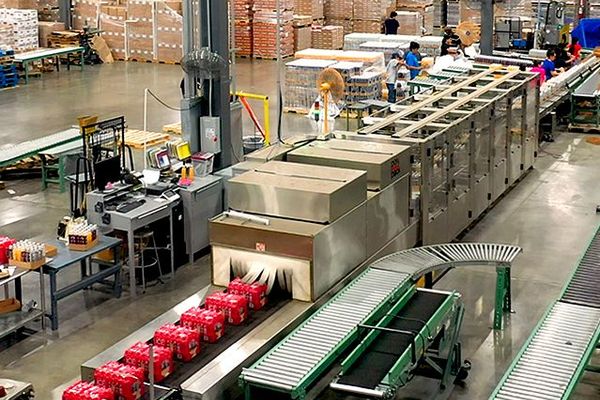
- Enhanced Throughput and Process Consistency: By replacing intermittent manual transport with a continuous or precisely controlled flow, conveyor systems establish a predictable production pace (takt time). This is fundamental to eliminating bottlenecks and increasing the overall output capacity of a production or packaging line.
- Reduced Demand for Manual Material Handling: In facilities with extensive manual transport, labor can be a significant operational cost. An automated conveyor system can reduce the dependency on manual labor for simple transport tasks, allowing personnel to be reallocated to higher-value activities like quality control or machine operation. The degree of labor reduction is dependent on the facility layout and the level of automation implemented.
- Improved Workplace Ergonomics and Safety: Manual handling of heavy, repetitive, or awkwardly shaped items is a leading cause of workplace injuries. Conveyors take over these high-risk tasks, drastically reducing the potential for strains, sprains, and other musculoskeletal issues.
- Protection of Product Integrity: Automated handling ensures smooth, controlled movement, minimizing the drops, impacts, and contamination risks associated with manual transport. This leads to a measurable reduction in product damage and scrap rates.
The Business Case for Conveyor Automation: Core Operational Benefits
A Technical Overview of Common Production Conveyor Types
The term “conveyor” covers a wide range of technologies. Selecting the appropriate type is the first critical decision, dictated entirely by the product being handled and the process requirements.
- Belt Conveyor Systems: The most versatile option, utilizing a continuous belt over a supporting frame. Ideal for items with irregular bottom surfaces, small components, or bulk materials. Belt material (e.g., PVC Belt Conveyor, Polyurethane, rubber, modular plastic) is a key specification based on application (e.g., food-grade, abrasion resistance).
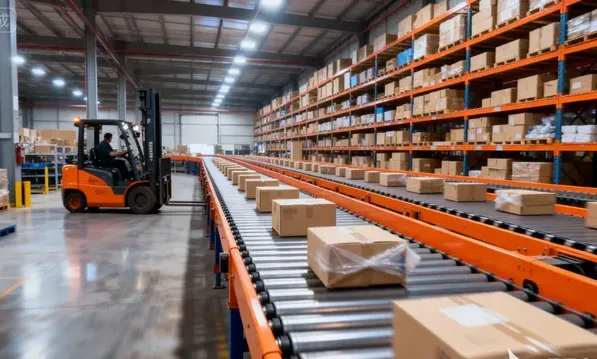
- Roller Conveyor Systems: Comprised of a series of rollers mounted in a frame, suitable for conveying items with rigid, flat bottoms like boxes, totes, and pallets.
- Gravity Roller Conveyor: Non-powered, using a slight decline to move products. Best for simple transport and accumulation zones, with options like a gravity flexible roller conveyor for adaptable layouts.
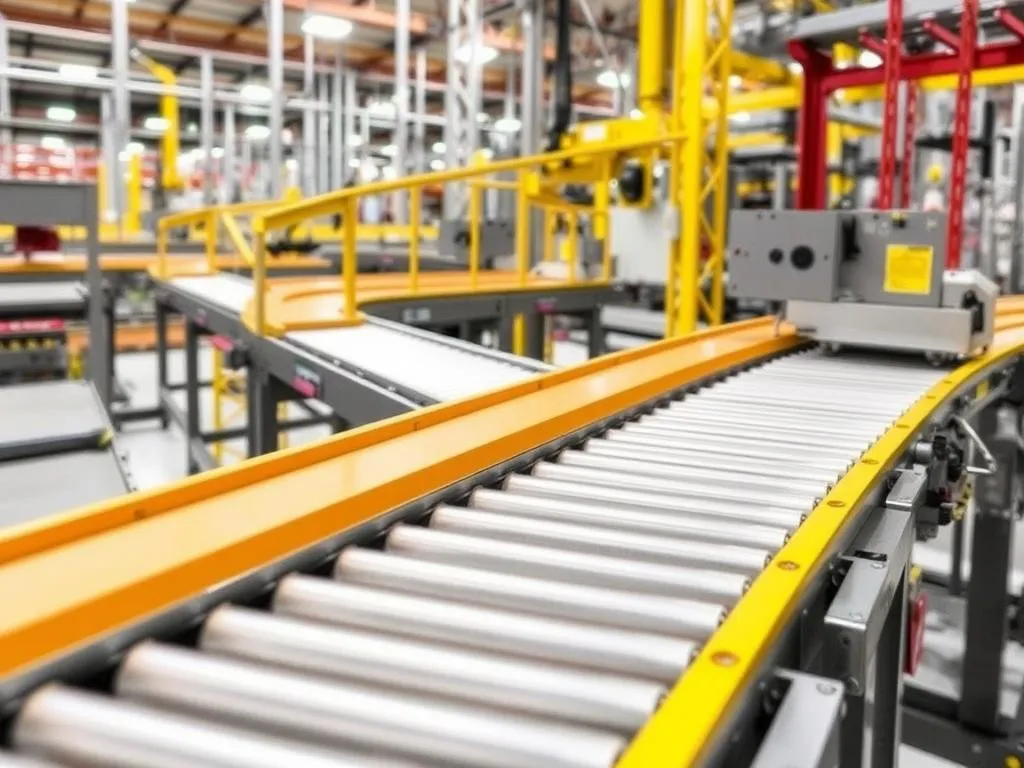
- Powered Roller Conveyor: Rollers are driven by a motor, typically via a belt or chain. A Powered Roller Conveyor provides controlled, level transport. Motorized Drive Roller (MDR) systems offer zonal, run-on-demand control for advanced accumulation and energy savings.
- Chain Conveyor Systems: Employ one or more strands of chain to make direct contact with the bottom of the load. Primarily used for heavy-duty unit loads like pallets, industrial containers, or engine blocks, especially in harsh environments.
- Slat Conveyor (or Apron Conveyor): Uses a chain-driven series of slats or plates to create a continuous, rigid surface. Common in assembly operations or for handling items unsuitable for belts, such as with a heavy duty slat chain conveyor.
- Spiral Conveyors: A specialized belt or slat conveyor that transports items in a helical path. This is the most space-efficient method for elevating or de-elevating products between different floor levels or mezzanines.
- Flexible & Extendable Conveyors: These conveyors, often using rollers or skate wheel conveyor designs, can be bent, shaped, and expanded/contracted. They are invaluable for truck loading/unloading and for creating temporary lines in dynamic warehousing environments.
Key Technical Specifications Buyers Must Confirm
A detailed specification is the foundation of a successful procurement process. Before issuing a Request for Quotation (RFQ), your engineering team must define the following critical parameters to ensure the proposed solution meets your operational needs.
- Load Capacity: Expressed in kg/meter or kg/unit load. Defines the maximum weight the conveyor structure and drive system can safely handle. Must account for the heaviest possible product and any potential for accumulation.
- Conveyor Speed Range: Measured in meters per minute (m/min). Must be specified as a fixed speed or a variable range, depending on process requirements. For variable speed, the control method (e.g., Variable Frequency Drive – VFD) is also critical.
- Key Dimensions:
- Effective Width: The usable conveyor surface width, which must be wider than the largest product’s footprint.
- Roller Pitch (for roller conveyors): The center-to-center distance between rollers. A minimum of three rollers must be under the longest product at all times for stable transport.
- Drive Method & Location: Specifies the technology used to power the conveyor (e.g., shaft-mounted motor/gearbox, tangential chain drive, MDR) and its physical placement (end drive, center drive), which impacts maintenance access and overall length.
- Accumulation Type: For applications where products must queue without pressure, the method is key. Options include zero-pressure accumulation (ZPA) using sensors and zonal control, or minimum-pressure accumulation using slip clutches or padded chain.
- Frame Material & Surface Treatment: Typically mild steel with a powder coat finish for general industrial use, or stainless steel (e.g., 304, 316) for food, pharmaceutical, or corrosive washdown environments.
- Control System & Sensors: Defines the level of automation. Can range from a simple manual motor starter to a PLC-based system integrated with photo-eyes, proximity sensors, barcode readers, and diverters for complex sortation and tracking.
- Compliance & Certification: Any required standards must be specified upfront, such as CE marking for the European market, UL listing for electrical components in North America, or FDA/USDA compliance for food-grade materials.
Key Technical Specifications Buyers Must Confirm
Common Failure Points & Maintenance Considerations
A conveyor’s reliability is directly tied to its maintenance program. Understanding common failure points allows for a proactive strategy to maximize uptime.
- Belt Tracking & Tension: A misaligned belt is the most common issue, leading to frayed edges and eventual failure. This is often caused by improper tensioning, worn pulleys/rollers, or an un-level frame. Regular inspection and adjustment are essential.
- Roller Bearing Wear: Bearings are the primary wear part in a roller conveyor. In dusty or dirty environments, sealed bearings are critical. A proactive maintenance plan includes listening for noise indicating wear and replacing bearings before catastrophic failure.
- Chain Elongation (“Stretch”): In chain-driven systems, chains will naturally elongate over time. This requires periodic tensioning. If neglected, it can lead to chain jumping off the sprockets, causing abrupt and potentially damaging line stoppages.
- Cleaning & Washdown Risks: In washdown environments, improper procedures can force water into bearings, gearboxes, and electrical enclosures, causing premature failure. Specifying appropriate IP-rated components and training cleaning crews on proper techniques is vital.
- Spare Parts Strategy: For critical lines, holding a stock of essential spare parts is non-negotiable. This list should be developed with the supplier and typically includes a spare motor/gearbox, a section of belting or chain, and high-wear items like bearings and sensors.
Primary Industries and Applications
Production conveyors are ubiquitous in any industry involving the physical movement of goods. Key applications include:
- Manufacturing & Assembly: Transporting sub-assemblies and finished goods between manual or robotic workstations.
- Warehousing & E-commerce Fulfillment: The backbone of order fulfillment, used for transport, accumulation, and high-speed sortation of parcels.
- Food & Beverage: Handling raw ingredients, primary packaged goods, and secondary cases, often requiring sanitary, washdown-rated stainless steel systems.
- Automotive: Heavy-duty transport of components, sub-assemblies, and final vehicle bodies through the assembly process.
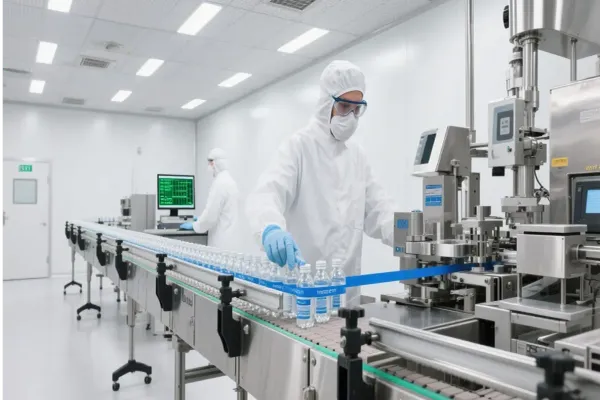
- Pharmaceutical & Cosmetics: Controlled, hygienic transport of products in highly regulated environments.
Primary Industries and Applications
Engineering & Procurement FAQ
Q: What is the key difference between a standard powered roller conveyor and a Motorized Drive Roller (MDR) conveyor?
A: A standard powered roller conveyor uses a single, larger motor to drive a long section of rollers via belts or chains, meaning the entire section runs continuously. MDR, or “run-on-demand,” technology uses individual low-voltage motorized rollers to create independent zones. A zone only activates when a product is present, offering significant energy savings, quieter operation, and built-in zero-pressure accumulation logic.
Q: For accumulation, how do I choose between zero-pressure and minimum-pressure systems?
A: Zero-pressure accumulation (ZPA) uses sensors to create zones and ensures there is no contact between queued products. It is essential for fragile, valuable, or irregularly shaped items. Minimum-pressure accumulation allows products to lightly touch and is a more cost-effective solution for durable, uniformly shaped items like sturdy boxes where minor back-pressure is acceptable.
Q: What is typically included in the scope of CE documentation from a supplier?
A: A complete CE package should include the Declaration of Conformity (DoC), a comprehensive technical file, a risk assessment conducted for the specific machine, and an instruction manual in the language of the end-user. It certifies that the equipment meets all relevant EU health, safety, and environmental protection directives.
Q: What is the typical division of responsibility for installation?
A: This must be clearly defined in the purchase contract. For simple, stand-alone conveyors, it may be the buyer’s responsibility (“mechanical installation by others”). For complex, integrated automated conveyor lines, a turnkey solution where the supplier handles mechanical and electrical installation, commissioning, and training is common and highly recommended.
Q: What is a realistic timeline for a custom conveyor project?
A: Timelines vary greatly with complexity. A simple belt conveyor might have a lead time of 4-6 weeks. A fully integrated system with custom controls can range from 12 to 20+ weeks, covering design approval, manufacturing, assembly, factory acceptance testing (FAT), and final on-site commissioning.
Finding the Right Production Conveyor Partner
Selecting a supplier is as critical as defining the technical specifications. The right partner acts as an extension of your engineering team, providing crucial support beyond the hardware itself. While many companies can manufacture a conveyor, a true partner delivers a comprehensive, reliable automation solution.
When evaluating suppliers, look for a proven track record in providing custom-engineered solutions. Since 2005, Stars Creativity has specialized in the R&D and production of automatic packaging and conveying equipment. Our approach is centered on engineering support and system integration. With extensive production facilities and a skilled technical team, we work with clients to design and build systems—from stand-alone units to fully integrated packaging lines—that are modular, reliable, and perfectly adapted to specific production needs. We provide comprehensive support, including installation services and after-sales maintenance, ensuring the long-term success of your automation investment in over 80 countries worldwide.


 English
  Français
  Deutsch (Sie)
  Русский
  Español
  Italiano
  Português
  العربية