Tel./WhatsApp:
+86 15266206885
E-mail:
[email protected]


Avoid your inquiry is delay response, please enter your WhatsApp/Skype along with the message, so we can contact you at the very first time.
We will reply you within 24 hours. If for urgent case, please add WhatsApp/WeChat: ,. Or call directly.
Loose products slow down your packaging process, waste materials, and create messy pallets. Then your team adds more wrap, more tape, and more labor—yet damage and returns still happen. The fix is a clean, repeatable bundling method: using a banding machine to apply a secure band with minimal material and high speed.
Bandall banding machine applications cover bundling, sealing, labeling, and unitizing products in manufacturing, logistics, e-commerce, and distribution. A banding machine uses paper or film bands to wrap a product or bundle, then seals the band (often via ultrasonic or hot-wedge methods) to create a neat, secure package. Many systems integrate into end-of-line automation for fast, consistent packaging.
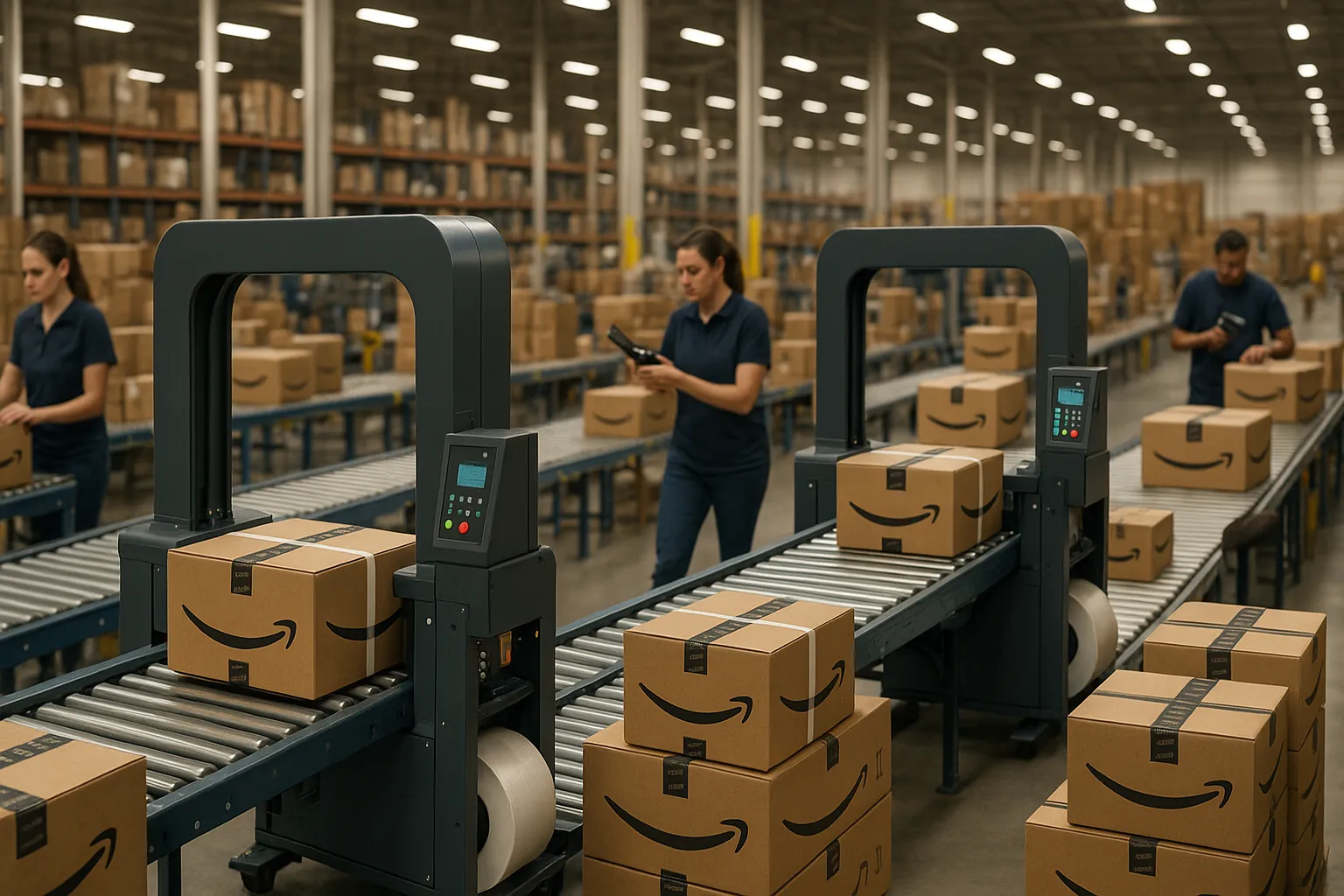
What is a banding machine and how does the machine work in packaging?
Applications of banding: what products are best to bundle with a band?
Banding equipment vs strapping machines: when is banding or strapping the right choice?
Paper or film: which banding materials should you choose for your industry?
Fully automatic banding machine lines: how do automatic systems support production volume?
Brand, logo, and variable data: how banding turns packaging into a marketing tool
Logistics and warehousing: how banding keeps items together and improves handling
Pharmaceutical and clean operations: why banding is a standard in banding for compliance-driven packaging
Sustainability and packaging waste: how to reduce material without losing secure packaging
How to choose the right banding solution: product size, width, tensioning, and reliability checklist
A banding machine is equipment that wraps a narrow band around a product, then seals it to hold items together. In plain terms, banding is a packaging method that bundles products neatly, without covering the full pack in film. It’s clean. It’s fast. And it’s easy to automate.
In many lines, the machine work looks like this: a product enters the arch, the band feeds around it, the system applies tensioning to get the right hold, then the band ends seal. Some systems use ultrasonic sealing (no heat generated at the seal point), while others use a hot-wedge process.
Why does this matter for B2B buyers? Because the banding process is repeatable. Your packaging process becomes predictable—fewer operator decisions, fewer mistakes, and more consistent outbound quality.
As a professional manufacturer of automatic packaging machines, we build these systems for real factories: manufacturing, warehousing, e-commerce fulfillment, and distribution centers that need certified, scalable packaging equipment.
The easiest way to think about applications of banding is “light-to-medium unitizing” where you want stability, identification, and speed—but you don’t want heavy strapping or full shrink coverage.
Banding works especially well for:
Printed products (leaflets, brochures, booklets)
Cartons and small boxes
Food and beverage multipacks (where allowed by your process)
Cosmetic boxes and promotional sets
Textile items (folded garments, towels)
Small parts packs and hardware kits
E-commerce bundles (two or more SKUs shipped together)
Many suppliers position banding as a way to bundle multiple products while keeping the pack tidy and easy to scan. It’s a way to bundle without turning your package into a slippery “shrink brick.”
In real operations, banding also supports “band-as-a-label” use cases—where the band carries product info, batch data, or retail branding.
Buyers often compare banding and strapping because both wrap something around a product. But the intent is different.
Strapping machines (typically polypropylene or polyester straps) are designed for heavier loads, pallet stabilization, and high tension.
Banding equipment is designed for clean bundling, gentle unitizing, and presentation-friendly packaging.
So when should you choose banding or strapping?
| Use case | Better choice | Why |
|---|---|---|
| Pallet load stabilization | Strapping machines | Higher tension, heavy-duty secure hold |
| Retail multipacks / tidy bundles | Banding machine | Sleek look, less material, easier opening |
| Printed products / pharma cartons | Banding equipment | Clean labeling and unitization |
| Mixed SKU kitting | Banding solutions | Keeps items together with minimal wrap |
If your goal is to keep “items together” and improve line flow, banding is often more cost-effective than overbuilding a strapping solution.Paper or film: which banding materials should you choose for your industry?
Your band is only as good as your material choice. Most projects decide between paper or film.
Paper bands: often used for sustainability goals, easy recycling messaging, and a premium unboxing feel.
Film bands: often used when you need moisture resistance or high clarity for product visibility.
Bandall-style equipment is designed to process a wide range of banding papers and films and supports multiple standard band widths.
In the market, paper rolls are commonly available in brown and white; film rolls often come clear.
Band width (width) matched to product size and stability
Surface (paper vs film) matched to your packaging needs
Printing needs (unprinted vs printed, logo, variable data)
Seal method compatibility (ultrasonic vs heat/hot wedge)
This is where the “right banding” decision saves real money: the correct band width and material can help you reduce material use while still keeping bundles secure.
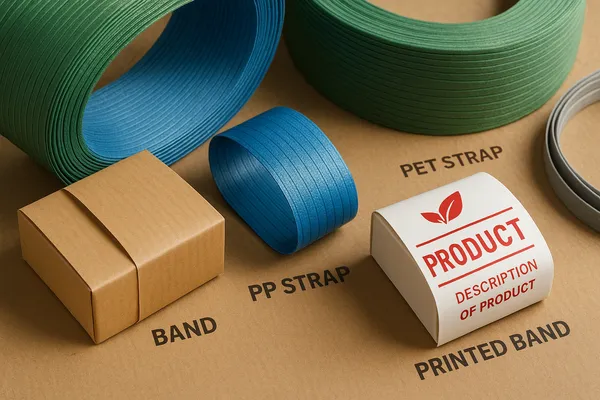
A fully automatic banding setup turns banding from “an operator task” into a production-line operation. You feed product in, the system bands, and the line keeps moving.
Many production banders are designed for high-volume environments, with widely cited speeds around 30 cycles per minute on average (and higher on specific models).
That speed matters when your production volume is high and labor is tight.
Where fully automatic machines pay off
E-commerce and fulfillment peaks
High SKU count packaging methods
Standard bundle sizes running all day
Operations targeting reliability and OEE improvement
In real facilities, automatic systems often integrate with conveyors, scanners, checkweighers, printers, and sortation. The key is designing the line so product spacing and orientation stay consistent.
If your factory needs a fully automated end-of-line packaging solution, we typically start with three numbers: product size range, throughput target, and layout constraints. Then we build the right machine type and integration plan.
Banding isn’t only about holding items together. It can also support your brand.
Printed bands can carry:
Your logo
Promotions (“2-pack,” “bundle & save”)
Barcodes / QR codes
variable data like batch number, date, or destination route
This is a big deal for DTC and retail-ready packaging because you get a clean label area without a full sleeve or carton redesign. It’s also useful for distributors who need a quick way to create promotional packs without changing primary packaging.
I like to describe this as “packaging plus communication.” Your band becomes part of your packaging solution, not just a restraint.
In logistics, the hidden cost is not only materials. It’s handling time and rework. If bundles split, pickers slow down, and outbound errors increase.
Banding helps by creating a stable unit:
Bundles are easier to scan
Products stay aligned in bins
Packs stack better on a pallet
Fewer loose items during shipping
Some banding market guidance highlights that banded packs support secure handling during logistics and enable efficient end-of-line automation.
If your site is in warehousing or distribution, banding can become the “clean glue” that ties kitting, labeling, and outbound together—without adding heavy wrap.
In pharma and other regulated packaging, you want:
Clean presentation
Clear identification
Secure unitization
Banding is used as a secondary packaging method to group items, show information, and support end-of-line automation.
Some banding equipment providers also market suitability for clean rooms and controlled environments—important for compliance-driven buyers.
This is why many teams treat banding as a standard in banding for carton grouping and labeling—not as a “nice-to-have.”
If you’re in pharmaceutical packaging, you’ll also care about:
Seal consistency
Traceability printing quality
Validation documents and certified components
That’s where a professional packaging machine supplier helps: we align the mechanical design, control logic, and documentation with your audit needs.
Sustainability is now a procurement requirement in many supply chains. Banding often supports sustainability goals because it uses a narrow strip instead of full overwrap.
Bandall’s own comparisons argue that banding can reduce material use and packaging waste versus shrink wrap methods.
A 2025 PackagingInsights article discussing material reduction also reports claims that banding can cut material use substantially versus shrink wrapping (figures vary by application).
Industry blogs aimed at packaging buyers also highlight paper banding as a way to reduce packaging waste by using minimal material to unitize products.
Less film than full shrink
Less energy than heat-shrink processes (often)
Cleaner pack, faster opening
Easier “right-size” packaging methods
Important note: sustainability depends on your exact materials, printing, and disposal pathway. I always recommend buyers run a simple before/after material-use test on their own SKUs.
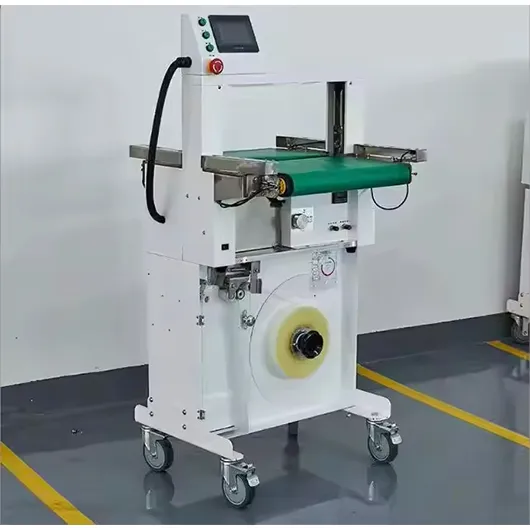
Automatic Online Paper Plastic OPP Film Banding Machine
This section is the “Action” part of AIDA. If you want predictable packaging and fewer downstream headaches, you need a clear selection checklist.
Single product band or bundle?
Product size range and height/width tolerance
Fragility and surface sensitivity
Paper or film
Printed or unprinted
Seal type (ultrasonic sealing or hot wedge)
Throughput (e.g., target 30 cycles per minute average, or higher if required)
Band width range
Desired tensioning range (tensioner settings)
Stand-alone table-top or arch bander
Inline fully automatic machines with conveyor controls
Add-ons: printers, scanners, reject lanes
Spare parts plan
Remote support options
FAT/SAT documents for certified packaging equipment
Operator training
If you’re not sure, start with a simple question: what are your packaging needs—presentation, speed, sustainability, or heavy load restraint? The answer usually points to the right machine type.
“The perfect solution isn’t the fanciest machine. It’s the one that matches your SKU mix and runs all shift without drama.”
What are the most common bandall banding machine applications?
Common applications include bundling cartons, printed products, promotional multipacks, e-commerce kitting, and secondary packaging in pharma and consumer goods where neat unitization and identification matter.
How fast can a banding machine run?
Many production banding systems are described around 30 cycles per minute on average, with higher speeds possible on specific models.
Should I use paper or film banding materials?
Use paper when you want sustainability messaging and easy opening; use film when moisture resistance or visibility matters. Many banding systems support a wide range of papers and films and multiple band widths.
What’s the difference between banding and strapping?
Banding focuses on neat bundling and light-to-medium unitization; strapping is typically for heavier loads and pallet stabilization. Banding is often chosen for clean presentation and minimal material use.
Is ultrasonic sealing better than heat sealing for banding?
Ultrasonic sealing is commonly described as generating no heat at the sealing point, while hot-wedge methods fuse the band ends with heat; the best choice depends on your material and required seal strength.
Can banding equipment be integrated into a fully automated production line?
Yes. Banding machines can be used as movable units or integrated into existing lines, depending on the machine and project design.
A banding machine creates a neat bundle by wrapping a band around products and sealing it—ideal for fast, clean packaging.
Applications of banding include bundling cartons, printed products, multipacks, and pharma secondary packaging for efficient unitization.
Choose banding vs strapping based on load: strapping for heavy pallet restraint, banding for tidy bundles and branding.
Banding supports paper or film materials and multiple band widths; match width and material to your product size and packaging needs.
Many production banders run around 30 cycles per minute on average—useful for high-volume automation.
Banding can help reduce material use and packaging waste compared with shrink methods, depending on the application.
If you share your product dimensions, bundle count, target throughput, and whether you prefer paper or film, I can recommend a specific fully automatic banding machine configuration (arch size, band width range, sealing method, and integration layout) for your production line.

 English
  Français
  Deutsch (Sie)
  Русский
  Español
  Italiano
  Português
  العربية