Tel./WhatsApp:
+86 15266206885
E-mail:
[email protected]


Avoid your inquiry is delay response, please enter your WhatsApp/Skype along with the message, so we can contact you at the very first time.
We will reply you within 24 hours. If for urgent case, please add WhatsApp/WeChat: ,. Or call directly.
When labels wrinkle, drift, or peel, your bottled water or soft drinks can look “cheap” even if the product is great. I’ve seen brands lose shelf space from simple label issues. The fix is not luck. It’s the right label machine matched to your bottle and line.
Most buyers pick a bottle labeler by speed alone. That’s a mistake. A reliable bottle labeling machine is really a complete labeling system: it must handle your container shape, the label type, the adhesive, and the real rhythm of your production line—including filling and capping.
A label machine is built to apply labels on bottles with repeatable accuracy. In a real factory, it does three jobs at once: it positions the bottle, it dispenses the label, and it presses the label down so it stays flat—so labels are applied consistently.
In beverage labeling, this matters because lines run fast and packaging gets handled a lot. Your container may be wet from rinsing, cold from filling, or dusty from storage. That environment changes how well the adhesive backing bonds and how stable the label stays on plastic bottles.
As a packaging machine manufacturer, I always start by asking: what’s your bottle surface like, and what’s your label material? When those two match, automatic labeling becomes boring—in a good way. When they don’t match, even the best labeller can struggle.
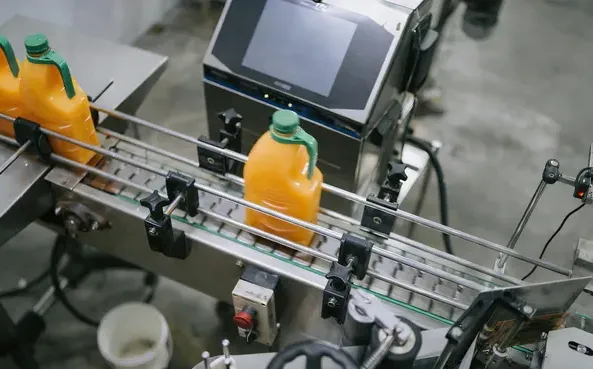
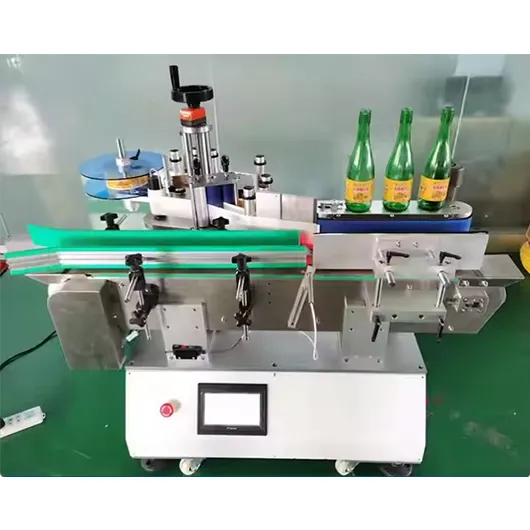
a bottle labeler machine
If you only remember one rule, remember this: the shape of the container decides the mechanics. A cylindrical bottle can spin smoothly, which makes it friendly for a wrap-around label. But a square bottle can’t spin the same way, and corners create new problems: bubbles, skew, or lifted edges.
For round packaging, an automatic round bottle labeling machine is usually the most stable choice. It uses rollers or belts to control rotation and a wipe-on mechanism to seat the label. For flat shapes, you’ll look at an automatic flat setup or a flat bottle labeling machine designed to control two broad faces without twisting.
Here’s a quick match table I use when I advise buyers:
| Bottle / container style | Best-fit labeling approach | Why it works |
| Round PET beverage / round plastic | Wrap-around label with controlled rotation | Smooth spin = clean wrap |
| Rectangular / flat panels | Automatic flat labeling | Stable face contact |
| Shaped containers (waist, ribs) | Flexible belt + sensor tuning | Needs better guidance |
| Corner-heavy packs | corner labeling machine | Targets edges without drift |
| Small vial-type containers | Compact guide + precise tamp | Tight tolerance needed |
If you tell me the bottle size and the size and shape range you run each week, I can predict whether a single machine will fit, or if a modular plan is safer.
Your label type is not just design—it’s a process decision. In water and beverage, I often see three common paths:
Wrap-around is popular because it’s simple and cost-friendly. A good system keeps tension stable so the overlap sits clean. Roll-fed can be extremely efficient on high volumes, but it demands good roll quality and line stability. Shrink sleeves look premium and support near 360-degree graphics, but they add heat shrink steps and more control points.
A practical way to choose is to rank your priorities:
If your line runs many SKUs—say, flavored water plus mineral water in multiple sizes—wrap-around or pressure-sensitive is usually easier to change quickly. If you run one flagship SKU all day, roll-fed starts to shine.
In beverage plants, bonding is everything. You will see three common options:
Cold glue is often used with certain paper labels and specific applications. Hot melt is fast-setting and can support high throughput; it’s common when you want strong, quick bonding on stable materials. Pressure-sensitive labels are convenient because they arrive ready to stick with an adhesive backing, but they are more sensitive to bottle moisture, surface energy, and storage temperature.
Here’s the question I ask on day one: are your bottles wet, cold, or dusty at labeling? If “yes,” we may need air-knife drying, better wrap belts, or a different adhesive choice. The right label applicator can compensate for small issues, but it can’t break physics.
Also, don’t ignore label stock. Some films behave differently on PET. For pet beverage packaging, we often test two or three materials and measure peel strength after 24 hours. That small test can save months of complaints.
For regulations and label content rules, many beverage and food labels must follow local requirements (ingredients, allergens, origin, etc.). In the U.S., FDA labeling guidance and 21 CFR rules are the main references. In the EU, Regulation (EU) No 1169/2011 is central.
A labeling system is more than one machine. It must “talk” to your upstream and downstream equipment so the flow is stable. In most beverage factories, labeling sits after filling and capping, then moves to coding, inspection, and packing (like carton or case packing).
When buyers tell me, “We only need a labeler machine,” I usually reply: “Tell me your line rhythm.” If your upstream releases bottles in bursts, your label station needs buffering. If your downstream is tight, you need smooth discharge and enough accumulation. This is how automated systems prevent jams and keep output steady.
Here’s a simple line map (common in beverage and water):
If you want true “set-and-forget,” ask suppliers how the machine handles bottle spacing, sensor noise, and changeover memory. In our factory builds, we often use a modular design so you can add a coder, reject station, or second head later without rebuilding the frame.
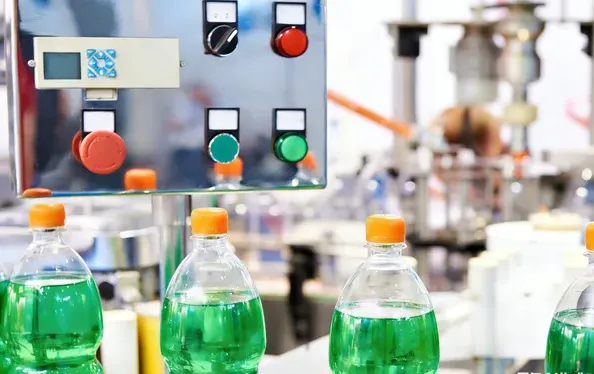
How to choose labeling systems for your bottle production line
Speed sells. But flexibility keeps you profitable.
A high-speed label station is great if your product mix is stable and your label supply is consistent. But if you run mixed SKUs, you need a machine designed to meet your needs in changeover time—because stopping the line kills output.
I like to frame it with a basic “time budget”:
Below is a simple example chart you can share internally. Imagine your line target is 100% output. Every stop reduces the real output.
Output impact (illustrative)
Perfect flow ██████████████ 100%
Minor stops ████████████ 85%
Frequent changeovers ██████████ 75%
Jams + rework ███████ 55%
Many factories track OEE (Overall Equipment Effectiveness) to see true productivity. OEE is commonly explained as Availability × Performance × Quality. Even if you don’t track full OEE, you can track two simple numbers: rejects per hour and minutes of stoppage per shift. That data will guide the right purchase.
If you ship to many countries or manage many distributors, “one label fits all” becomes hard. This is where print and apply can help. Instead of storing dozens of finished label rolls, you print variable data (lot, date, market language, QR) at the line and apply it right away.
Pre-printed labels are still great when designs rarely change. They often look cleaner for premium branding. But they increase inventory complexity and raise the risk of using the wrong roll.
A practical hybrid is common in beverage plants:
If your customer requires stronger traceability, barcode standards and best practices often reference GS1 systems. That matters because your label isn’t just for consumers—it’s for scanning in warehouses and retail.
Labeling problems usually come from small “stacked” errors, not one big defect. I’ve seen these common causes:
The goal is to reduce the risk of three costly outcomes: rework, scrapped bottles, and customer complaints. The good news is that many fixes are simple:
Practical QC controls
I also suggest a “golden bottle” method: keep one perfect bottle for each SKU. Operators compare the first labeled bottle after changeover to the golden bottle before full speed starts. That single habit can remove a surprising amount of waste.
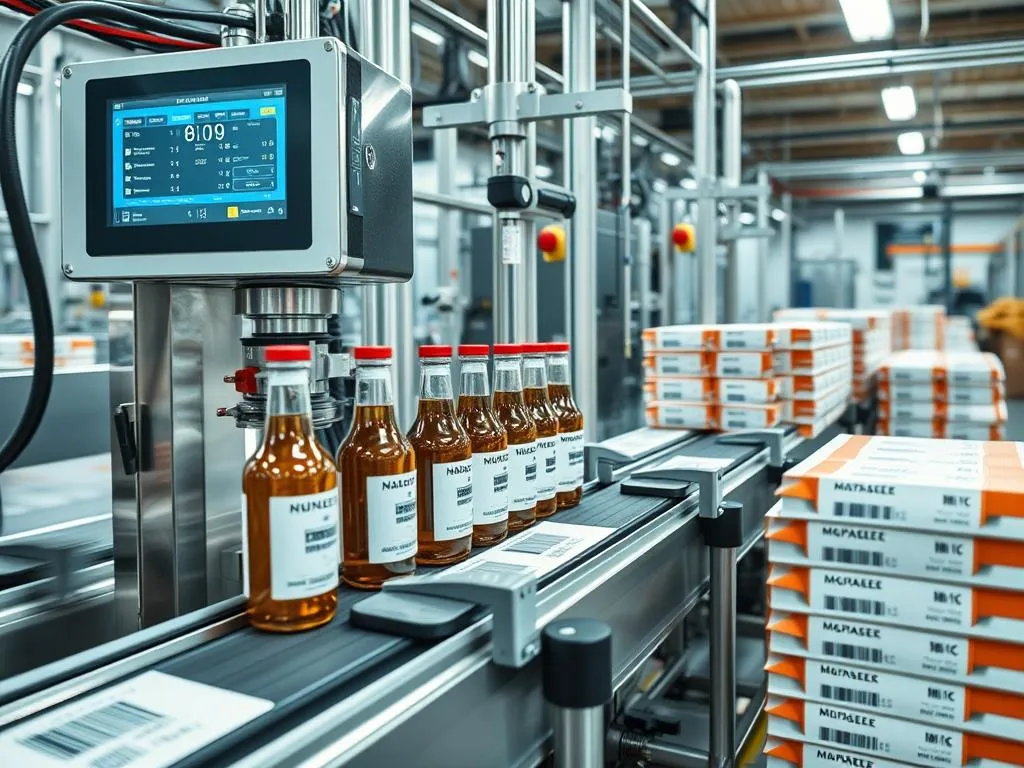
Auto Labeler Machines
Many buyers focus on the machine, but compliance is the hidden driver. Your label must often include required food info, and the presentation rules can differ by region. In the U.S., FDA guidance explains required statements and how labels should be presented. In the EU, consumer food information rules are centered on Regulation (EU) 1169/2011 and related guidance pages.
From the equipment side, the big needs are:
If your customers are large retailers, they may push for GS1-based identification and scannable codes. GS1 standards explain how barcodes and data carriers support supply chains.
In my experience, the safest plan is to design the labeling station so machines can apply the main label consistently, while leaving space for coding and scanning. That way, your labeling solution supports both marketing and logistics.
Before you request a quote, gather these details:
If you want a quick self-check: ask yourself if the machine will fit your future growth. Many lines start with one size, then expand. A scalable, modular platform helps protect your investment.
A regional water brand ran manual labeling with manual machines. The operator used a foot pedal tabletop unit. Output was inconsistent, and label skew caused retailer complaints.
We tested:
Solution:
Result:
This is a pattern I’ve seen many times. When you move from tabletop to true automation, the biggest gain is not just speed—it’s repeatability and less operator fatigue.
It depends on bottle stability, label type, and changeover needs. A stable round bottle with wrap labeling can run much faster than a mixed set of shaped containers. I suggest sizing for your average run, not your best-case demo.
A label applicator is often the labeling head or module that dispenses and presses the label. A bottle labeling machine usually includes conveyor, bottle handling, sensors, and the applicator—so it’s a complete working station.
Sometimes, yes—if the design supports quick guide changes and adjustable belts. But if you have large variation in size and shape, two dedicated setups can be more stable and faster overall.
First check moisture and surface condition. Then confirm the adhesive is matched for PET, and verify pressure settings at wipe-on. If peeling happens after cold storage, test label stock and adhesive backing behavior after 24 hours.
Hot melt can be strong and fast, while pressure-sensitive is convenient and flexible. The best choice depends on your environment, label material, and the look you want. We often run small trials with your bottle samples before final selection.
If you sell through modern distribution or retail, GS1-based codes are commonly used for scanning and traceability. It’s smart to design your label layout and printing steps around scannability from day one.
If you share your bottle samples, label roll specs, and target output, I can recommend a practical labeling system configuration (and the key options) that fits your current line and your next growth step.

 English
  Français
  Deutsch (Sie)
  Русский
  Español
  Italiano
  Português
  العربية