Tel./WhatsApp:
+86 15266206885
E-mail:
[email protected]


Avoid your inquiry is delay response, please enter your WhatsApp/Skype along with the message, so we can contact you at the very first time.
We will reply you within 24 hours. If for urgent case, please add WhatsApp/WeChat: ,. Or call directly.
Bad labels don’t fail quietly. One crooked sticker can trigger rework, late shipments, and angry customers. As orders grow, that mess gets worse. The solution is to define your product, label, and line targets first, then buy equipment that can hit them every day.
To choose a labeling machine, match your package type and label style to the correct machine format, then confirm speed, accuracy, and changeover needs for your production line. A good setup is the one that applies the label cleanly, scans well, and stays stable as your SKUs and compliance rules change.
Before you compare suppliers, write down what you need to label and why. In our automatic packaging machine factory, we start every project with a simple worksheet: product, pack, label location, and the “why” behind it. That one page reveals your specific needs and saves you from buying the wrong tool. It also helps us propose a machine for your specific workflow instead of guessing.
Ask yourself: is the goal brand graphics for product presentation, warehouse tracking, or legal text? That decision shapes the right label, your label dimensions, and your labeling requirements. It also tells us whether you should use a simple label applicator or a more advanced system with printers and scanners. This is also where you can say it plainly: choosing the right labeling machine is about repeatable results, not fancy features.
Here’s a quick set of key factors we ask B2B teams in manufacturing, logistics, warehousing, e-commerce, and distribution:
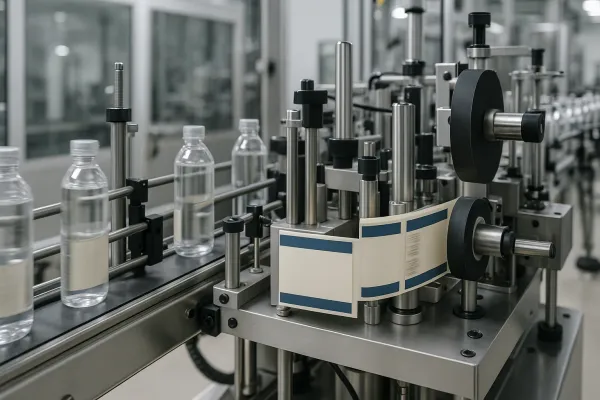
What do you need to label on your production line?
If you feel stuck, use this quick flow. It’s not perfect, but it will point you to the right machine fast.
If you can answer these, you can select a machine that fits your machine for your needs today—and still has room for growth tomorrow.
There are many labelers on the market, but the best industrial labeling machine is the one that matches your product and label geometry. Flat cartons behave differently than round bottles. A pouch may flex under pressure. A jar may rotate and shift.
Here’s a simple way I explain it to buyers: best labeling is almost always a “fit” problem, not a “brand” problem. Once you understand the main types of industrial labeling machines, you can choose faster and avoid expensive rework.
A practical example: labeling jars often needs steadier side support than thin bottles, because jars can be heavier and rotate differently on the belt. That small difference can change the whole setup.
Different labelers shine in different spots on the line, so think “fit” first.
Common options by use case:
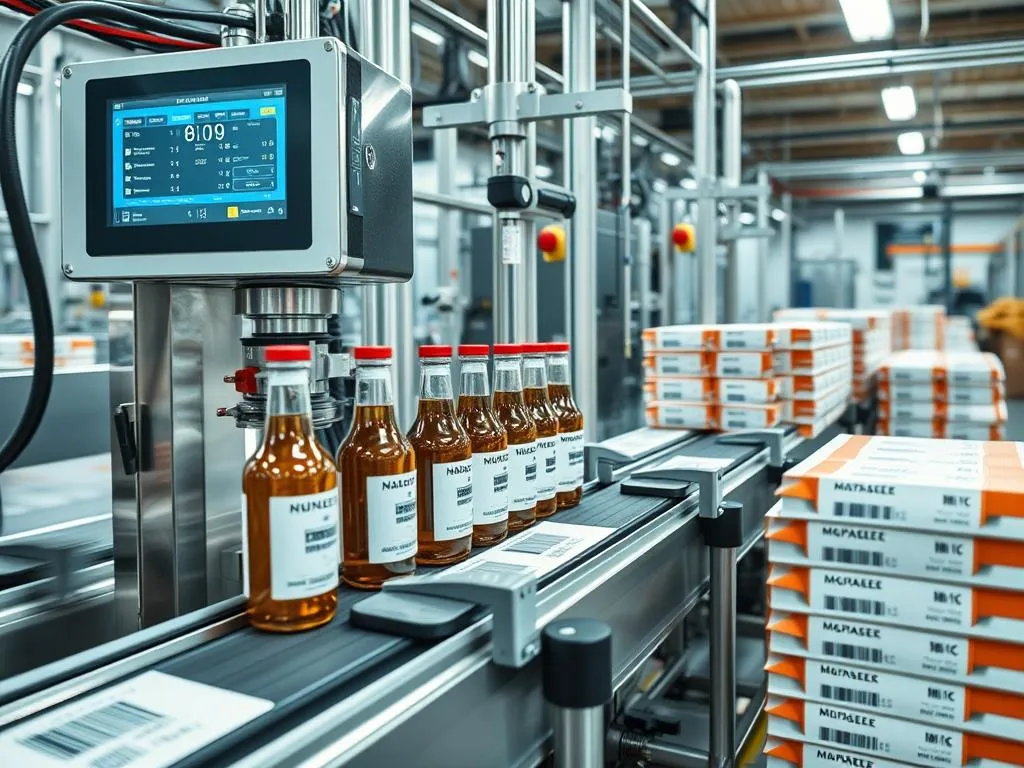
If you want real examples, you can compare our catalog pages for afully automatic top-side surface sticker labeling setup and an automatic carton side-surface sticker labeling setup.
If you run mostly flat cartons, our automatic flat-plane top-side labeling setup is a common starting point. For square bottles and flat containers, a fully automatic double-sided bottle labeling setup keeps packs stable at speed.
| Type | Best for | Typical notes | A “watch out” |
| Top-side sticker station | cartons, pouches, lids | steady feed, simple setup | product height variation |
| Side label applicator | bottles, cans | good alignment with rollers | slippery containers |
| Top-and-bottom station | trays, clamshells | two faces in one flow | space and guarding |
| Double-sided station | square/flat bottles | stable belts + two heads | setup time if SKUs vary |
If your product needs a full-body label, you may also need a wrap-around setup with a belt or roller system. A modular layout also makes upgrades easier when you add new SKUs or new checks.
Buyers often ask me for “the speed,” but speed alone can mislead. You need two numbers: output target and placement tolerance. We usually start from production volume, then back-calculate what the line must do per minute.
A quick example makes it real. Say you ship 24,000 units per day and you have 6 true run-hours after meetings, breaks, and changeovers. That’s 24,000 ÷ 360 minutes ≈ 67 units per minute. Now add a buffer for growth and micro-stops, and you may target 80–90. Your machine should still hold accuracy while it applies the label on slightly different packs.
A simple method:
This is where automation pays off. Stable product handling, reliable sensors, and consistent pressure let the automatic label land correctly even when operators swap pallets or cartons quickly. If the rest of your line is older, we can match the machine to existing production so you get a smooth hand-off, not a bottleneck.
Many “machine problems” are actually label problems. Paper absorbs moisture. Film can build static. Some adhesives grab too fast; others grab too slow. If you ignore label stock, you risk curling, slipping, and messy corners even with a strong application head.
What we test with customers (simple but powerful):
This part of the labeling process sounds small, but it decides whether you fight edge-lift all week or run smoothly.
If you send real samples early, it becomes easier to pick the right industrial labeling machine that meets your unique needs. It also helps us tune settings so the machine can handle your labels without wasting product.
Also think about your environment. Cold rooms, dusty workshops, and high-humidity lines change how labels behave. We often run a small trial to see if the label stock lifts at corners or if the adhesive “slides” before it sets. That trial is cheap insurance.
If your label never changes, pre-printed rolls plus a basic applicator is often enough. But when data changes (dates, batches, serials, shipping codes), you’ll want print and apply in-line.
A print-and-apply unit (often called a Print-Apply-System) prints variable information and then applies it immediately, which is popular in warehouses and shipping lines.
For many B2B operations, the real driver is traceability and standards. For example, GS1 identification keys like GTIN support consistent product ID across trading partners, and that often pushes teams toward variable-data labeling in logistics workflows.
One practical tip: if you plan to connect to ERP/WMS, ask your supplier how the labeling solution handles templates, data transfer, and barcode verification. That is where the “hardware” and “software” parts meet.
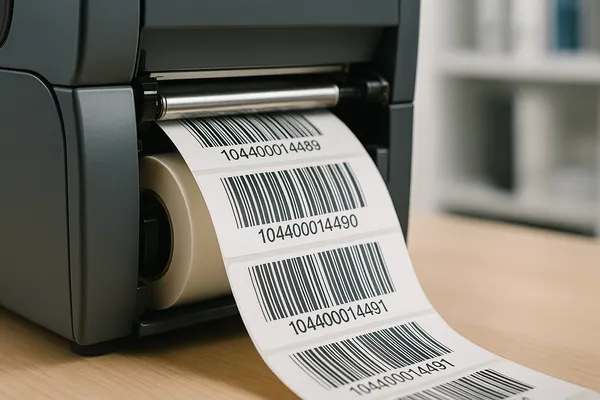
Do you need print and apply to add variable data and barcodes?
In busy operations, labeling errors are rarely one big failure. Good label applicator machines and a well-tuned automated labeling machine can catch problems early, even when shifts are busy.
Features we recommend for a right labeler (and yes, the wording matters):
Here’s the “human” part: good UX reduces mistakes. Clear light stacks, simple fault messages, and a repeatable recovery sequence protect output during peak shipping.
This is the section many buyers skip—and then regret. A machine is a critical decision because your label station must live with your real schedule: mixed orders, different cartons, and seasonal peaks.
To keep changeovers fast, we design systems with (and yes, some light customization can make a big difference on your line):
In other words, picking the right design means fewer stops and less downtime, and it meets your unique needs as your SKU mix grows. If you need a machine for your specific packaging rhythm, note your SKUs and changeover times before you compare quotes.
If you ship into regulated markets, product labeling is not optional. Regulatory compliance is one of the biggest reasons B2B teams upgrade their line controls. Food labels in the U.S. follow detailed rules under 21 CFR Part 101, and the EU has its own requirements under Regulation (EU) No 1169/2011.
That doesn’t mean your equipment must be complicated. It means your process must be controlled, and your labeling method should be documented for audits and operator training:
If you run a labeling machine for food, also consider allergen guidance and local enforcement expectations, especially if you do mixed production.
If your labels carry logistics barcodes, follow your customer’s barcode rules. GS1’s general specifications and guidance are widely used to define barcode content and quality expectations in supply chains, so it’s smart to validate scan quality during your trials.
Price is easy to see. Total cost is hidden. The initial investment is only one part of the decision, and the machine is important because it touches every finished unit you ship.
A simple cost breakdown table:
| Cost area | What to estimate | Why it matters |
| Labor vs manual labeling | operators per shift | frees people for higher-value work |
| Rework and waste | mislabels, rejects | protects customer satisfaction |
| Spares and service | belts, sensors, rollers | avoids long stoppages |
| Integration | conveyors, I/O, scanners | prevents schedule surprises |
| Growth | extra SKUs, more data | protects your upgrade path |
In one e-commerce distribution project, a team moved from manual labeling to an automated labeling machine that printed shipping labels on demand. They reduced two packing stations, cut mis-ship claims, and stabilized daily output during peak season. The biggest win wasn’t “speed”—it was consistency and fewer rescans.
A quick “payback feel” chart:
Higher labor + errors ██████████
Semi-automatic station ███████
Fully automatic station █████
When you calculate return on investment, include the hidden cost of rework and chargebacks—not just headcount.
A more numbers-first way to estimate ROI:
Even small improvements matter, and the machine can significantly reduce stress on your team when order volume spikes. If you cut mislabels by 0.5% on 100,000 packs/month, that’s 500 fewer issues to chase—less scanning trouble, less rework, fewer customer emails.
Choosing the right industrial labeling is not only about specs. It’s about what happens before shipment, during install, and after start-up. As a professional manufacturer of automatic packaging machines, we build systems that integrate with conveyors, checkweighers, sealers, and warehouse scanners. The goal is a stable labeling system that operators trust. We ship complete labeling equipment with clear manuals, wiring, and spare-part plans so your team can run it confidently from day one.
One last mindset shift: choosing the best industrial labeling setup means matching real operations—not copying a competitor’s spec sheet. If you’re buying for multiple sites, we can standardize a right labeler machine configuration so operators can transfer skills from plant to plant.
Here’s what good technical support looks like in practice:
A quick way to avoid surprises is to do a short “site survey” before build. We review conveyor height, available floor space, electrical and air supply, and how scanners or printers will connect. This simple step links the machine and application to real conditions, so installation is smooth and start-up is fast.
“If operators can’t recover in 60 seconds, the line will suffer. We design for simple recovery.” — our commissioning lead
If you’re comparing options, look at real machine pages like an automatic round bottle labeling setup or a semi-automatic double-sided labeling setup. They show how different frames, guides, and heads match different SKUs.
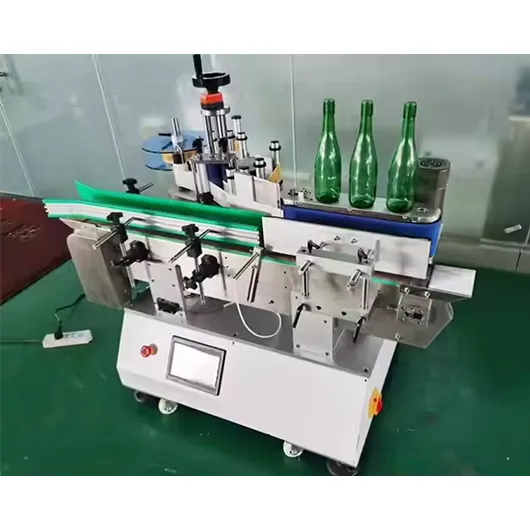
Automatic Round Bottle Labeling Machine
How do I decide between a label applicator and a full print-and-apply setup?
If your label content is fixed, a label applicator is usually enough. If your data changes per order, print-and-apply reduces mistakes and improves traceability.
Can one machine cover bottles, cartons, and pouches?
Sometimes. It depends on the type of labeling machine and the changeover plan. Many plants use one frame with interchangeable heads, or separate stations for stability.
How do I avoid crooked labels on fast lines?
Start with stable handling, then add good sensors and consistent pressure. When you apply labels at speed, wobble is the enemy—so guides and belts matter as much as the head.
What should I send a supplier for an accurate proposal?
Send your product drawings, label dimensions, photos of your line, and your production volume targets. That helps us determine the type of labeler and propose the machine you need without guessing—so you get a labeler machine for your business, not a random catalog pick.
What are the biggest risks buyers miss?
Ignoring label stock, skipping sample testing, and underestimating integration time. Also, don’t forget power, air, and safety guarding needs.
How do I know I made the right choice?
When selecting the right system, the line starts quickly, operators feel confident, and scan rates stay high even during peak demand. That’s how you know you chose the right machine.

 English
  Français
  Deutsch (Sie)
  Русский
  Español
  Italiano
  Português
  العربية