Tel./WhatsApp:
+86 15266206885
E-mail:
[email protected]


Avoid your inquiry is delay response, please enter your WhatsApp/Skype along with the message, so we can contact you at the very first time.
We will reply you within 24 hours. If for urgent case, please add WhatsApp/WeChat: ,. Or call directly.
Manual handling slows production, increases labor costs, and causes packaging errors. Many factories struggle to move products efficiently between processes. The solution? Choosing the right conveyor belt system—the backbone of modern automated packaging and logistics operations.
The most common conveyor belt system is the belt conveyor, widely used across manufacturing, warehousing, and e-commerce industries. It uses a continuous moving belt supported by rollers or a flat surface to transport items efficiently, safely, and automatically across production lines and distribution centers.
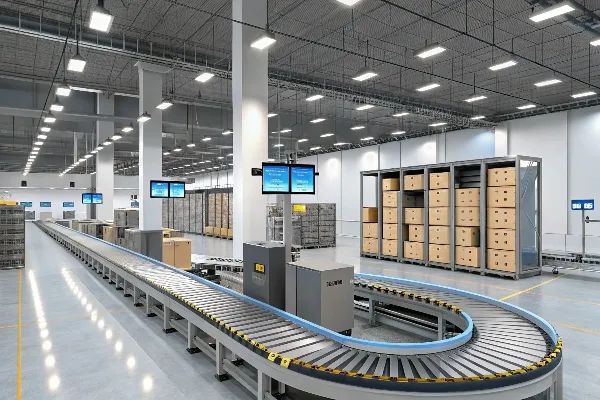
conveyor belt system in automated warehouse
What Is a Conveyor and Why Is It Essential in Modern Industry?
What Makes a Belt Conveyor the Most Common Conveyor System?
What Are the Different Types of Conveyor Belt Systems?
How Do Roller Conveyors Compare to Belt Conveyors?
Which Type of Conveyor Belt Is Best for Packaging Automation?
Conveyor Belts and Their Applications Across Industries
How to Choose the Right Conveyor Belt for Your Operation?
What Materials and Designs Make Conveyor Belts Durable?
Integration of Conveyor Systems in Automated Packaging Lines
Future Trends in Conveyor Belt Technology and Smart Logistics
A conveyor is a mechanical system designed to transport materials or products from one location to another automatically. In modern factories, a conveyor replaces manual carrying, improving efficiency and workplace safety.
At its core, a conveyor consists of a moving surface supported by a conveyor frame, powered by a motor and guided by a pulley system. Products sit on the belt and travel smoothly along the conveyor path. This simple concept transformed global manufacturing.
Today, conveyors are often used in:
Manufacturing assembly lines
Logistics warehouses
E-commerce fulfillment centers
Food industry packaging plants
Distribution centers handling high volumes
In our experience as a professional manufacturer of automatic packaging machines, almost every automated line depends on a reliable conveyor. Without it, packaging automation simply cannot function efficiently.
A well-designed conveyor enables consistent material handling, reduces damage, and ensures products move at controlled speeds.
Among all conveyor types, the belt conveyor is considered the common conveyor solution worldwide. Why? Because it balances simplicity, flexibility, and cost efficiency.
A belt conveyor uses a moving belt stretched between pulleys. The belt is supported either by a solid bed or a roller bed, allowing smooth motion with minimal friction.
| Feature | Benefit |
|---|---|
| Continuous movement | Stable product flow |
| Flexible layout | Works in straight or incline paths |
| Gentle handling | Ideal for packaging |
| Scalable design | Easy expansion |
Belt conveyors are well-suited for moving cartons, parcels, bags, and packaged goods. That’s why they are the primary types chosen in automated packaging lines.
Many buyers ask us why belt conveyors remain the standard. The answer is simple: they reliably transport items while maintaining product orientation—critical for labeling, sealing, and sorting.
Understanding different types of conveyor belts helps buyers select equipment tailored to production needs.
Use continuous flat belts
Ideal for cartons and lightweight goods
Common in packaging lines
Include raised sections
Designed for incline transport
Prevent slipping materials
Modular Belt Conveyors
Built with interlocking modular plastic belts
Easy maintenance and cleaning
Allow directional changes
Save factory space
These types of conveyor systems support different applications across various industries.
A key advantage is adaptability. Belts can be made to suit product size, weight, or environmental conditions.
A roller conveyor uses rotating rollers instead of a continuous belt. Products move either by gravity or powered motion.
| Feature | Belt Conveyor | Roller Conveyor |
|---|---|---|
| Surface | Continuous belt | Individual rollers |
| Best for | Small items | Rigid packages |
| Stability | High | Medium |
| Automation | Excellent | Moderate |
Roller bed conveyor belts combine both technologies—rollers supporting a belt to reduce friction.
Conveyors consist of rollers when heavy loads must be handled efficiently. However, roller systems may struggle with irregularly shaped items, where belt conveyors perform better.
For automated packaging, the ideal type of conveyor belt depends on product flow and packaging speed.
In packaging lines we manufacture, the most efficient solution is typically a flat belt conveyor integrated with sealing or labeling machines.
Flat belts → Cartons and boxes
Modular belts → Food industry hygiene requirements
Cleated belt conveyors → Vertical lifting
Pallet conveyor → Heavy bulk goods
A packaging conveyor must synchronize with machines. The belt is the elevator belt that moves products precisely into sealing or wrapping stations.
Automation buyers often overlook synchronization. Yet accurate timing ensures packages are carried from one end of the conveyor to another without jams.
Conveyor belts play a pivotal role in modern production. They enable continuous workflow and reduce manual labor.
| Industry | Conveyor Usage |
|---|---|
| E-commerce | Parcel sorting |
| Manufacturing | Assembly line movement |
| Logistics | Order fulfillment |
| Food industry | Hygienic packaging |
| Warehousing | Inventory transport |
Conveyor belts play a vital role in distribution centers, where thousands of packages must move hourly.
In the handling industry, conveyors are commonly used to move products safely and consistently.
Our clients in logistics report productivity increases of 30–50% after installing automated conveyor belt systems.
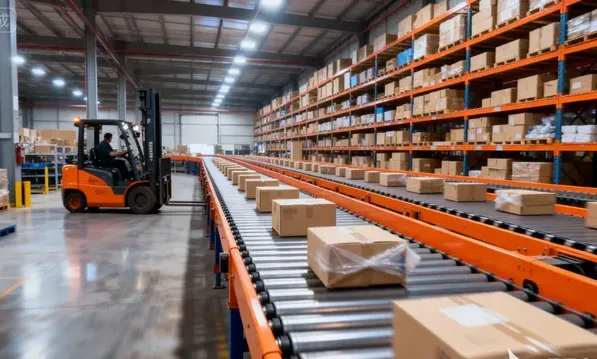
What a Conveyor System Manufacturer Actually Does
Selecting the correct type of conveyor requires understanding workflow, product characteristics, and expansion plans.
Product weight and size
Speed requirements
Layout constraints
Automation compatibility
Maintenance needs
Ask yourself:
Do you need incline movement?
Will you transport bulk material or packaged goods?
Is hygiene critical?
A properly designed conveyor system ensures long-term performance and scalability.
As an automatic packaging machine manufacturer, we help buyers design integrated solutions—not just standalone conveyors.
Modern conveyor belts are made from advanced materials engineered for longevity.
PVC and PU belts
Rubber belts
Stainless steel flat wire belts
Modular plastic belts
Belts are suitable for handling abrasive materials, food-grade products, or heavy industrial goods.
A flexible belt allows curved movement, while reinforced designs handle high loads.
Belts require proper tensioning and alignment along the conveyor to prevent wear.
Belts offer durability, energy efficiency, and reduced maintenance when properly selected.
Automation transforms how factories operate. Today, a conveyor is not just transport equipment—it is a control system component.
A packaging conveyor system connects:
Filling machines
Carton sealers
Labeling machines
Palletizers
The center drive design improves space usage and simplifies maintenance.
In automated lines, conveyor belts include sensors and smart controls. These systems used allow real-time monitoring and optimized product flow.
Case Study: E-commerce Warehouse
A logistics client implemented modular belt conveyors integrated with automatic packaging machines:
Labor reduced by 40%
Throughput increased by 60%
Error rate dropped significantly
This demonstrates how conveyors are commonly used to transform operational efficiency.
The future of conveyors is intelligent and connected.
AI-driven speed adjustment
Energy-efficient motors
Smart sensors for predictive maintenance
Modular expandable systems
Conveyor belts play a central role in Industry 4.0 factories. Smart conveyors adapt automatically to production changes.
As automation expands across various industries, demand for advanced conveyor solutions continues to grow.
What is the most common conveyor belt used today?
The belt conveyor is the most widely used system because it efficiently transports packaged goods across manufacturing and logistics environments.
Which industries use conveyor belts the most?
Manufacturing, warehousing, e-commerce, and the food industry rely heavily on conveyor systems for automated product movement.
How do I choose between roller and belt conveyors?
Choose belt conveyors for small or irregular products and roller conveyors for rigid boxes or pallets.
Are conveyor belts customizable?
Yes. Conveyor belts can be designed with modular layouts, incline angles, and specialized materials to match production requirements.
How long do conveyor belts last?
With proper maintenance, industrial conveyor belts typically last 5–10 years depending on load and usage.
Can conveyors integrate with packaging machines?
Absolutely. Modern automated packaging lines rely on synchronized conveyor systems for seamless operation.
The belt conveyor is the most common conveyor belt system worldwide.
Conveyor belts enable efficient material transport across automated operations.
Different conveyor belt types serve different industrial applications.
Roller and belt conveyors each offer unique advantages.
Automation integration dramatically improves productivity.
Choosing a professional packaging machine manufacturer ensures seamless conveyor integration and long-term efficiency.

 English
  Français
  Deutsch (Sie)
  Русский
  Español
  Italiano
  Português
  العربية