Tel./WhatsApp:
+86 15266206885
Correio eletrónico:
[email protected]


Para evitar atrasos na resposta ao seu pedido, indique o seu WhatsApp/Skype juntamente com a mensagem, para que possamos contactá-lo logo na primeira vez.
Responder-lhe-emos no prazo de 24 horas. Se for um caso urgente, adicione WhatsApp/WeChat: ,. Ou telefone diretamente.
Manual box forming slows output, ties up staff, and creates uneven packaging quality. When cartons are not formed squarely or sealed well, the whole line suffers. A case erector solves this by forming, folding, and sealing boxes in a repeatable, fast, and controlled way.
A montador de caixas de cartão, also known as a carton or case erector, takes flat corrugated blanks, opens them into shape, folds the bottom flaps, and applies tape or hot melt glue to seal the base so the case is ready for filling. Depending on the model, this can be done in semi-automatic or fully automatic mode, with speeds ranging from modest operator-assisted output to high-volume inline production.
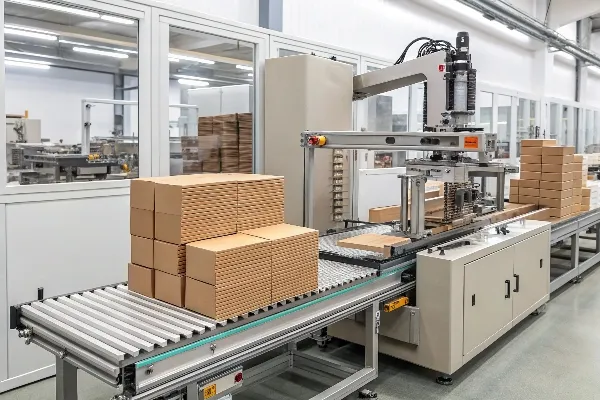
Máquina automática de montagem de caixas de cartão dobrável
As a professional manufacturer of automatic packaging machines, we look at a carton erector from a practical B2B angle. Buyers in manufacturing, warehousing, e-commerce, logistics, and distribution do not just want a machine that can erect a box. They want a system that fits throughput, carton range, line layout, and long-term operating cost.
O que é um montador de caixas?
How does a carton erector work step by step?
What parts make a case erector run smoothly?
How do semi-automatic and fully automatic models differ?
What are the main types of carton erectors?
How does bottom sealing work with tape or glue?
Why do carton size and corrugate quality matter?
How do you choose the right machine for your packaging line?
What common problems cause downtime and carton jams?
How can a case erector improve productivity and reduce labor costs?
A montador de caixas is a machine designed to automatically turn flat cardboard blanks into formed, bottom-sealed shipping cases. In simple terms, it takes a flat carton, opens it, squares it, folds the bottom flaps, and applies tape or glue so the box is ready for filling. That is why it is also known as a carton erector or box-forming machine.
In modern packaging operations, the case erector is usually installed near the start of a packaging line. It prepares cases before a robot, manual packer, or product-loading station fills them. Instead of asking operators to form every case by hand, companies use the machine to automate one of the most repetitive parts of the packaging process.
That matters across various industries. A factory shipping consumer goods, a warehouse preparing e-commerce orders, or a distribution center handling bulk cartons all benefit from more consistent case setup.
The working cycle is straightforward, but the timing has to be precise. First, the machine takes one flat blank from the magazine. This is often done with a suction cup or a pick-off mechanism that separates one blank from the stack. The machine then pulls the blank open into a squared corrugated case shape.
Next comes folding. The machine positions the box and folds the minor and major bottom flaps into place. After that, the machine applies tape or hot melt glue for bottom sealing. Once the base is sealed, the case moves by transportador to the next station, where it is ready for filling.
This is why many buyers choose a case erector when they want to streamline box setup. The machine handles box formation and sealing in one repeatable sequence. A properly tuned machine can ensure consistent case geometry and reduce human variation in flap folding and tape placement.
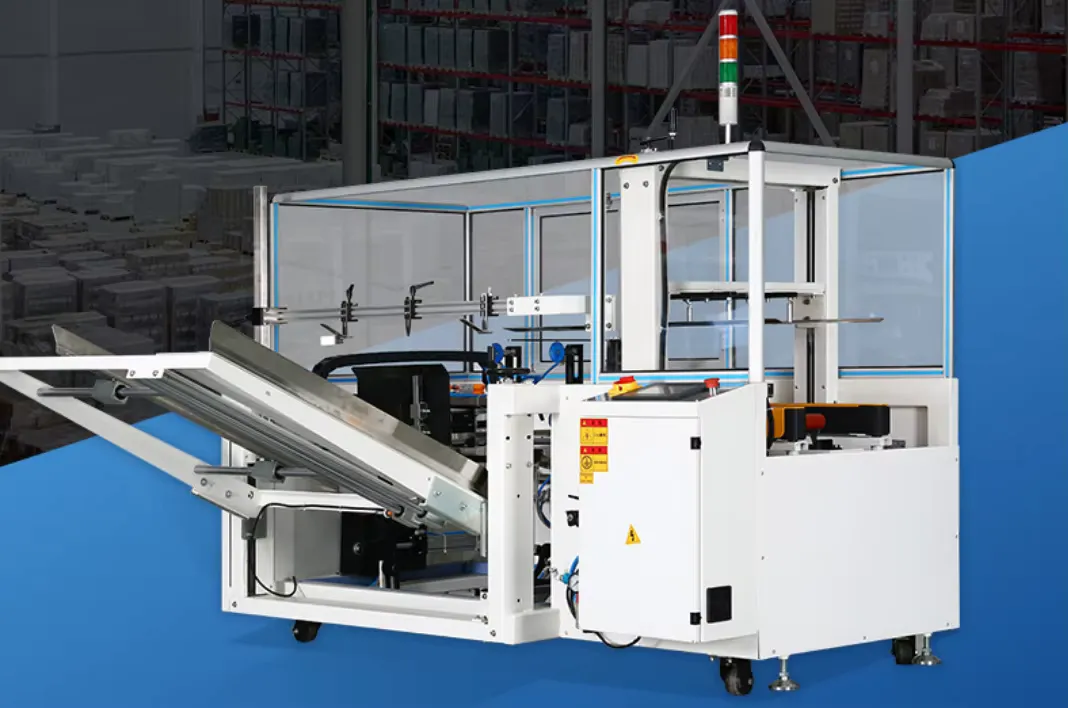
A case erector’s performance depends on several coordinated parts. These usually include the blank magazine, forming section, mechanical arms or guides, flap folders, sensor systems, tape head or glue system, drive components, and discharge conveyor. In more advanced designs, servo motors are used to improve motion control and changeover accuracy.
Many case erectors are equipped with sensors that check blank presence, flap position, and box transfer. A good sensor setup helps prevent empty picks, poor folding, and discharge errors. Machines with better control logic can help ensure consistent running and reduce interruption on the production line.
From a buyer’s point of view, the mechanical details matter because reliability affects downtime. A machine that looks fast on paper but struggles with box pickup or flap control will not improve production efficiency in the real world. That is why we usually advise customers to look beyond boxes per minute and evaluate construction, control, and maintainability too.
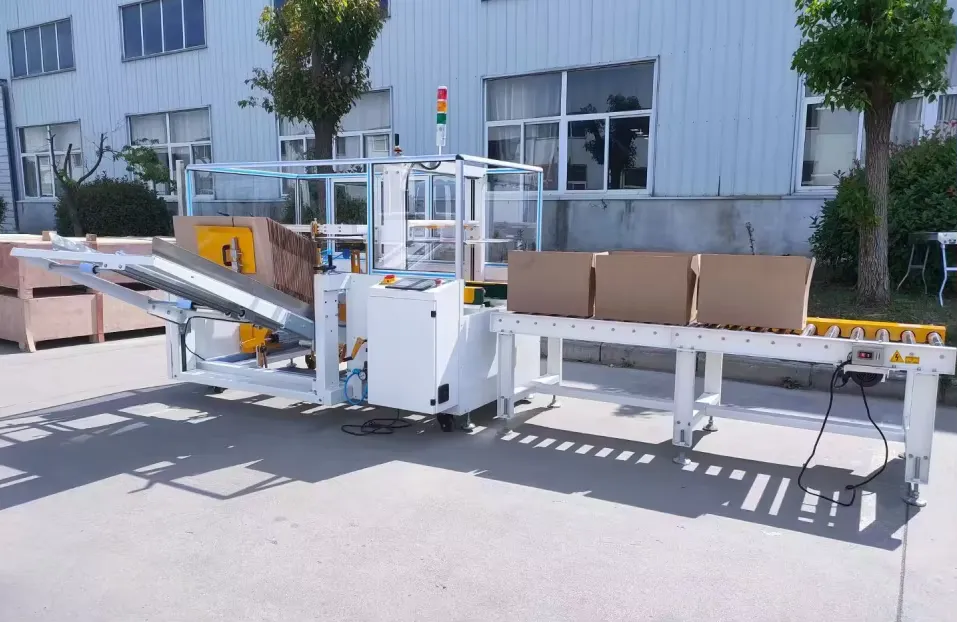
A semi-automatic machine usually requires an operator to place or position the flat case, while the machine performs folding and bottom sealing. Sigma Equipment describes a semi-automatic case erector as a machine where an operator inserts the case and the machine folds the flaps, often with pneumatic pushers.
A fully automatic model automatically feeds blanks from the magazine, forms the case, folds the flaps, and seals the base without constant manual handling. This is the better choice for high-volume operations or lines where the customer wants to reduce labor input and keep a continuous flow to downstream equipment.
The tradeoff is simple:
| Tipo | Melhor para | Main advantage | Main caution |
|---|---|---|---|
| Semi-automático | Lower to medium output | Lower investment, simpler operation | More operator involvement |
| Totalmente automático | Continuous or de grande volume production | Mais alto produtividade, less manual handling | Higher initial investimento |
So when buyers ask whether they should use a case erector in semi-auto or auto form, the answer depends on labor availability, production volume, and line speed. For some operations, semi-auto saves time at low cost. For others, full automation is the only way to keep up.
There are different ways to classify the types of carton erectors. The most common split is by automation level: semi-automatic, automatic, and more advanced robotic or flexible systems. Wayne Automation notes that case erectors can be produced in automatic, hand-loaded, and fully robotic configurations.
You can also group them by sealing method. Some machines use tape for carton sealing. Others use glue, especially hot melt glue, for stronger or cleaner base closure. There are also machines designed around a fixed carton size and machines with faster changeover settings to accommodate multiple sizes and shapes.
For B2B buyers, the practical types of carton erectors are:
semi-automatic tape-seal machines
fully automatic tape-seal machines
glue-seal erectors
multi-size or random-case systems
robotic or highly flexible systems for varied packaging needs
That is the core of what buyers need to know about case erectors before choosing.
After the case is formed, the lower flaps must be closed and the base must selo securely. Tape-seal models use a tape head that applies a strip along the seam after the flaps are folded. Glue-seal models apply adhesive, usually hot melt glue, before the flaps are compressed together. Both methods are common in the packaging industry.
Tape systems are popular because they are simple, visible, and easy to service. Glue systems can look cleaner and may suit certain high-volume packaging or shipping requirements. The right method depends on case style, throughput, temperature, shipping stress, and the user’s maintenance preference.
This is also where a strong end-of-line plan matters. Once the case is erected and filled, it may move to a top sealer, then to máquinas de cintar or palletizing.
Not every blank behaves the same way. The carton size, board stiffness, cut accuracy, and corrugate quality all affect how well the machine performs. A weak or inconsistent blank can lead to mispicks, poor squaring, or unstable bottom sealing. The Fibre Box Handbook is widely used as a reference for corrugated box styles and performance principles.
That is why buyers should ask about the range of carton sizes the machine supports and whether changeover is manual, guided, or tool-less. Some machines are optimized for a narrow band of regular slotted cases. Others can handle broader sizes and shapes with faster adjustments.
If your line handles multiple corrugated boxes, this becomes even more important. A machine may look ideal at one size but lose performance when the carton size changes often. So the best effective case setup is not only fast. It also matches the real case mix used in your business.
Start with your packaging requirements. Ask:
What case style are you running?
How many cases per minute do you need?
Is your operation high-volume or moderate speed?
Do you need tape or glue?
Will the machine handle one size or several?
How much manual labor do you want to remove?
Then look at the rest of the production line. A case erector should not be chosen in isolation. It must match the filler, sealer, conveyor, and downstream equipment. If the erector runs faster than the loading station, cartons back up. If it runs too slowly, it starves the line. The right machine is the one that fits the whole sistemas de embalagem layout, not just a catalog speed number.
We usually tell B2B buyers to evaluate five things together: speed, carton range, sealing method, maintenance access, and future automation goals.
The most common issues are poor blank quality, wrong settings, low vacuum, misaligned flap folders, and worn sealing components. These can lead to carton jams, skewed boxes, weak seals, or transfer failures. Machines with better controls and better sensor coverage are more likely to catch problems early.
Another issue is mismatch between the machine and the box. If the machine is not tuned for the right carton size, flute direction, or board quality, performance drops. This is why operators must ensure the machine is set correctly before running a new lot.
The good news is that many modern automated machines are designed to make troubleshooting easier. Better HMIs, alarms, and guided adjustments help teams reduce downtime and improve uptime. That is one of the biggest reasons buyers move from manual forming to automatic carton handling.
A well-chosen case erector improves speed, repeatability, and labor efficiency. It can reduce labor costs by taking workers off repetitive case setup and reallocating them to higher-value tasks. It also helps create consistent carton formation and consistent packaging quality, which supports better downstream packing and shipping.
In practical terms, it helps companies:
automate case setup
reduzir os custos de mão de obra
support high-volume packaging
improve line balance
reduce manual errors
save time and labor
Some suppliers note outputs around 10–40 cartons per minute for certain machine categories, though actual speed depends on box style, automation level, and line conditions.
For many factories and warehouses, the business case is clear. The machine reduces labor, improves throughput, and helps optimize the line. Over time, that can make the higher initial investment worthwhile.
| Método | Labor need | Speed and efficiency | Melhor utilização |
|---|---|---|---|
| Manual forming | Elevado | Lowest | Small-volume operations |
| Semi-automático | Médio | Moderado | Growing operations |
| Totalmente automático | Baixa | Mais alto | Continuous or high-volume operations |
Continuous or high-volume operations
This table explains why so many B2B users move toward fully automated box handling as order volume grows. A manual method works at first. A semi-automatic solution improves control. A fully automatic erecting machine can become the base of a more reliable line.
What does a carton erector do?
A carton erector takes flat corrugated blanks, opens them into shape, folds the bottom flaps, and seals the base so the box is ready to be filled.
Is a carton erector the same as a case erector?
In most industrial use, yes. The terms are often used interchangeably for a machine that forms and bottom-seals corrugated shipping cases.
What is the difference between semi-automatic and fully automatic case erectors?
A semi-automatic model needs more operator input, while a fully automatic machine automatically feeds, forms, folds, and seals the case. Semi-auto fits smaller operations; full auto fits higher output lines.
Do case erectors use tape or glue?
They can use either. Some models use tape for bottom sealing, while others use adhesive such as hot melt glue. The best choice depends on the box, line speed, and shipping needs.
How many boxes per minute can a case erector run?
It depends on the machine type, box style, and line setup. Some supplier references mention around 10–40 cartons per minute for certain categories, while advanced systems can vary beyond that depending on configuration.
What should I check before buying a case erector?
Check carton range, sealing method, output requirement, blank quality, changeover method, maintenance access, and how the erector fits your full line. The best choice is the one that matches your real operating conditions.
A case erector forms flat corrugated blanks into bottom-sealed cases ready for filling.
The machine usually picks a blank, opens it, folds the bottom flaps, and applies tape or glue.
Semi-automatic machines need more operator input; fully automatic systems support higher throughput.
Carton range, corrugate quality, and sealing method all affect performance.
A good erector can improve productivity, reduce manual handling, and support more reliable packaging operations.
The best machine is not just the fastest one. It is the one that matches your case mix, line layout, and long-term automation plan.

 Português
  English
  Français
  Deutsch (Sie)
  Русский
  Español
  Italiano
  العربية